

Understanding Maryland building codes and permit requirements before starting a major home renovation can save you significant time, money, and stress. Skipping the permit process or misunderstanding local code requirements are among the most common and costly mistakes homeowners make when undertaking large-scale renovation projects. At Clarksville Construction, we guide Maryland homeowners through every step of the permitting and compliance process so projects move forward without unnecessary delays or legal complications.
Whether you are planning a kitchen remodel, a home addition, a basement finish, or a full structural renovation, knowing what triggers a permit requirement and how Maryland’s building codes apply to your project is essential before a single nail is driven.
How Maryland Building Codes Work
Maryland follows the International Building Code and the International Residential Code as its foundation, adopting these model codes at the state level through the Maryland Department of Labor’s Division of Labor and Industry. However, Maryland is notable for allowing individual counties and municipalities to adopt local amendments that modify or expand upon the state baseline.
This means building codes in Howard County are not identical to those in Anne Arundel County, Montgomery County, or Baltimore City. Local amendments can affect everything from energy efficiency requirements and structural standards to fire separation rules and electrical specifications. For homeowners in Clarksville and surrounding Howard County communities, it is the Howard County Department of Inspections, Licenses, and Permits that governs local code enforcement and permit issuance.
Working with a contractor who understands both the state baseline and the local amendments that apply to your specific jurisdiction is critical to ensuring your renovation is designed and built to the correct standard from day one.
What Types of Home Renovations Require a Permit in Maryland?
Not every home improvement project requires a building permit, but major renovations almost always do. In Maryland, permits are generally required for any work that affects the structural integrity of a home, modifies its electrical or plumbing systems, changes its footprint, or alters its mechanical systems.
Projects that typically require a permit in Maryland include home additions of any size, room conversions such as finishing a basement or attic, structural wall removal or modification, deck and porch construction, garage conversions, accessory dwelling unit construction, roof replacements in many jurisdictions, significant electrical panel upgrades or rewiring, new HVAC system installation, and plumbing modifications that involve moving or adding fixtures.
Projects that typically do not require a permit include cosmetic updates such as painting, flooring replacement, cabinet installation, and minor fixture swaps that do not involve altering the supply or drain lines. However, the line between what does and does not require a permit varies by county, and when in doubt it is always safer to confirm with your local permit office before proceeding.
Clarksville Construction handles permit research and application as part of our project planning process, ensuring homeowners are never left guessing about what approvals are required for their specific renovation scope.
The Permit Application Process in Howard County and Maryland
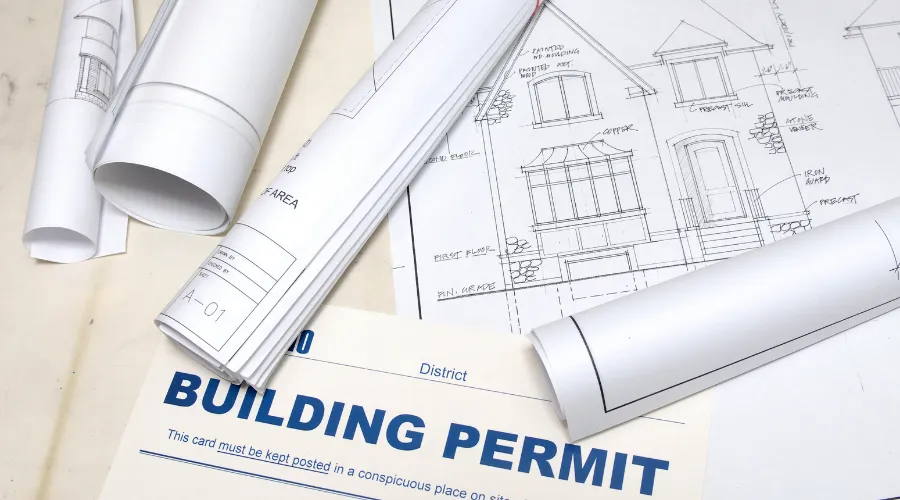
Obtaining a building permit in Maryland involves submitting an application to your local permitting authority along with supporting documentation that demonstrates your project will comply with applicable codes. For major renovations, this typically includes architectural drawings or construction plans, a site plan showing the property layout and any proposed changes to the structure’s footprint, and in some cases structural engineering calculations.
In Howard County, permit applications can be submitted through the county’s online permitting portal, which has streamlined the process considerably in recent years. Once submitted, plans are reviewed by county staff who evaluate compliance with zoning requirements, building codes, fire codes, and in some cases environmental regulations related to stormwater or grading.
Review timelines vary depending on project complexity and current application volume. Simple permits for straightforward projects may be approved within a few weeks, while complex additions or ADU projects can take longer if revisions are required or if the project triggers additional agency reviews. Starting the permit process early and submitting complete, accurate documentation the first time is the most effective way to avoid delays.
According to the Maryland Department of Labor, homeowners who proceed with unpermitted construction face risks including stop-work orders, mandatory demolition of non-compliant work, fines, and complications when selling the property.
Structural Renovations and Code Compliance in Maryland
Structural renovations are among the most heavily regulated categories of home improvement work in Maryland. Any project that involves removing load-bearing walls, adding new structural openings, modifying the roof framing system, or building an addition that connects to the existing structure must comply with the structural provisions of Maryland’s adopted residential code.
In practice, this means structural renovations typically require engineered drawings prepared or reviewed by a licensed structural engineer, particularly for load-bearing wall removal, beam sizing, and foundation modifications. Howard County and other Maryland jurisdictions require these calculations to be submitted with permit applications for projects that affect structural systems.
Older homes throughout Clarksville, Ellicott City, and the greater Howard County area often present unique structural challenges during renovation. Hidden conditions such as undersized headers, outdated framing practices, or foundation issues discovered during demolition can affect both the scope of required code compliance work and the overall project timeline. Clarksville Construction conducts thorough pre-construction assessments to identify and plan for these conditions before work begins.
Electrical, Plumbing, and Mechanical Permit Requirements
In Maryland, electrical, plumbing, and HVAC work performed as part of a major renovation requires separate trade permits in addition to the primary building permit. These trade permits are tied to licensed contractors who are authorized to perform and certify the work in their respective disciplines.
Electrical work in Maryland must comply with the National Electrical Code as locally adopted, and all new or modified electrical systems are subject to inspection before walls are closed. This includes panel upgrades, new circuit installation, and any wiring associated with an addition or converted space.
Plumbing permits are required for any work involving new supply lines, drain lines, or fixture additions. In Howard County, plumbing inspections are conducted at rough-in stage before concealment and again at final completion. HVAC permits cover new system installations, duct modifications for additions, and equipment replacements above certain thresholds.
The International Code Council provides detailed guidance on how these trade disciplines intersect with residential building codes, and understanding these relationships helps homeowners appreciate why the permit process, while sometimes time-consuming, exists to protect the safety and quality of their home.
What Happens During a Building Inspection in Maryland
Once permits are issued and work begins, Maryland building codes require inspections at key stages of construction to verify that work is being performed correctly before it is concealed behind walls, ceilings, or flooring. Common inspection stages for major renovations include footing and foundation inspections for additions, framing inspections after structural work is complete, rough-in inspections for electrical, plumbing, and HVAC before insulation and drywall, insulation inspections in some jurisdictions, and a final inspection upon project completion.
Failing an inspection requires corrective work before the project can proceed, which can add time and cost if issues are not caught and addressed early. Working with an experienced contractor who builds to code from the start and schedules inspections proactively is the most reliable way to move through this process efficiently.
Clarksville Construction coordinates all required inspections directly with Howard County and other local jurisdictions, keeping projects on schedule and ensuring every phase of work is approved before moving to the next stage.
Consequences of Skipping Permits on Major Renovations
The temptation to skip the permit process to save time or money is understandable, but the consequences of unpermitted major renovations in Maryland are serious and long-lasting. Homeowners who sell a property with unpermitted work are legally required to disclose it, and buyers or their lenders may require the work to be permitted retroactively or removed entirely before closing.
Retroactive permitting, sometimes called a permit after the fact, is often more expensive and complicated than obtaining a permit upfront because walls and systems may need to be opened for inspection. Homeowners insurance policies may also deny claims related to damage caused by or involving unpermitted work, leaving homeowners financially exposed in the event of a fire, flood, or structural failure.
Beyond resale and insurance risks, unpermitted structural or electrical work poses genuine safety hazards that affect everyone living in the home. The permit and inspection system exists specifically to ensure that major renovations meet minimum safety standards.
Plan Your Maryland Renovation the Right Way with Clarksville Construction
Navigating Maryland building codes and permit requirements does not have to be overwhelming when you have an experienced local contractor managing the process on your behalf. From initial planning and permit applications through inspections and final approval, Clarksville Construction handles the compliance side of your renovation so you can focus on the finished result.
Our team has deep familiarity with Howard County permitting procedures, Maryland building codes, and the local amendments that affect projects throughout Clarksville, Ellicott City, Columbia, and surrounding communities. We build every project to code, every time, because your home’s safety, value, and legal standing depend on it.
Contact Clarksville Construction today to schedule a consultation and start your major home renovation the right way.


